
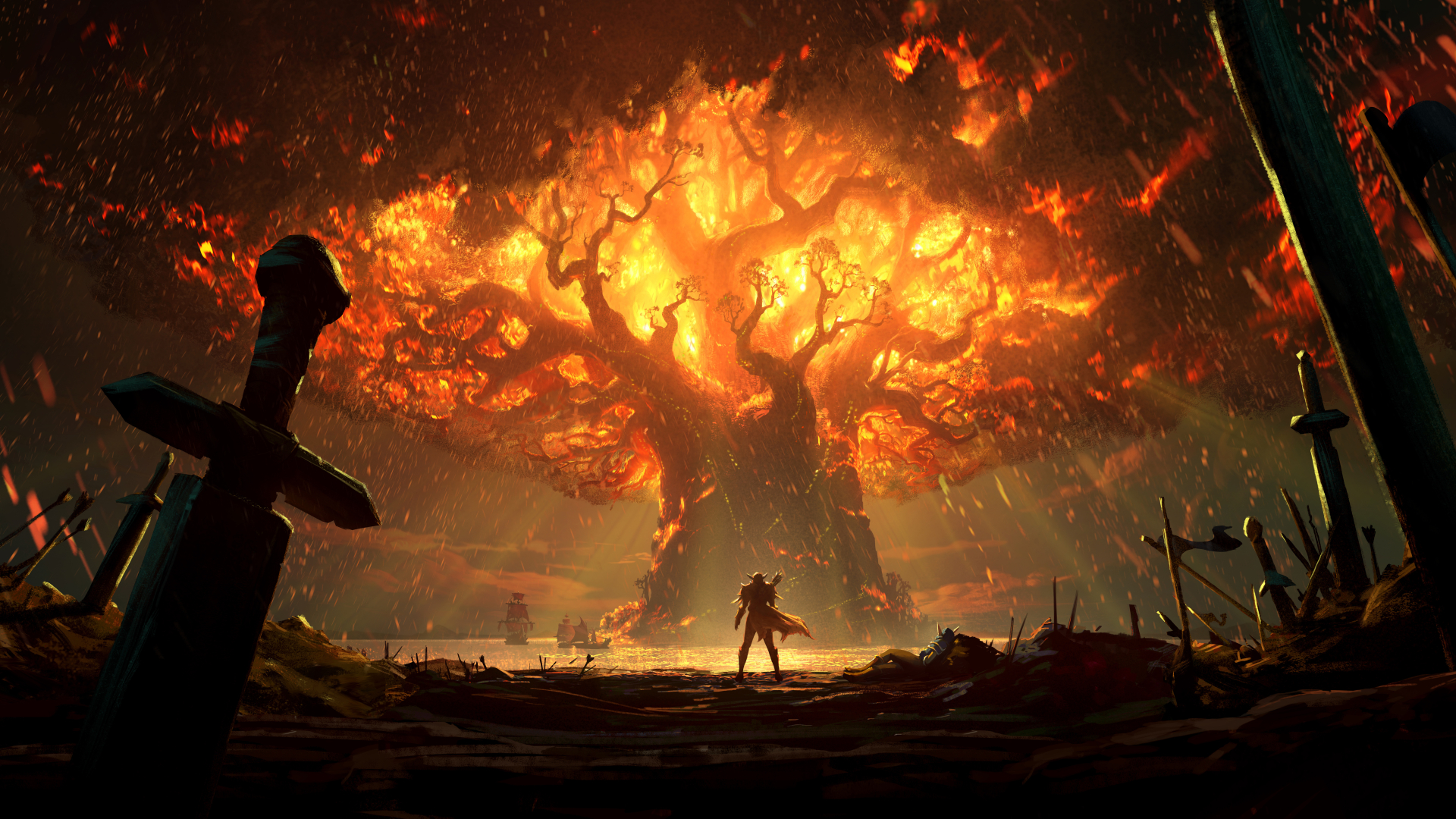
The War Within introduces raid encounters built around extensive multi-phase designs that force teams to adapt, communicate, and evolve strategies mid-fight. Difficulty curves surge and dip across shifting mechanics, environmental hazards, and dynamic role requirements—reshaping how raiders prepare and perform at every level.
This article examines how modern raid design challenges coordination, teamwork, and moment-to-moment decision-making like never before.

Boss Fights Transition Through Rapidly Changing Phases
Encounters now pivot between add waves, burst phases, safe-zone rotations, and movement-heavy transitions. Each phase carries unique rules, damage profiles, and responsibilities that force raid teams to adapt instantly. Static strategies dissolve as teams prepare flexible plans that evolve throughout the fight.
Raids become dynamic battlegrounds where adaptability is king.
Environmental Hazards Become Central to the Difficulty Curve
Platforms collapse, storms surge across arenas, shifting gravity fields alter player movement, and erupting fissures divide the raid into coordinated sub-groups. These environmental mechanics transform the encounter from a single battlefield into a layered challenge where positioning is as important as damage output.

Survival becomes a dance of timing, awareness, and spatial control.
Role Responsibilities Shift Mid-Fight
Tanks swap duties as threat resets occur mid-phase, healers pivot from burst triage to damage amplification mechanics, and DPS adapt to priority-target swaps with razor-thin timing. These role transformations push players to demonstrate versatility and communication under pressure.
Every role gains new depth as encounters reshape expectations in real time.
Systems Driving the New Difficulty Curve

Several design pillars define the era of multi-phase raid encounters:
| Design Pillar | Description | Team Impact |
|---|---|---|
| Multi-Stage Encounter Flow | Fights transition through numerous mechanics | Requires flexible strategies |
| Dynamic Environmental Hazards | Arena changes throughout the fight | Forces spatial awareness |
| Adaptive Role Mechanics | Responsibilities shift mid-encounter | Demands role mastery |
| Increasing Team Coordination | Mechanics require synchronized execution | Elevates teamwork above raw output |
| Mechanic Overlaps | Multiple abilities combine unpredictably | Creates true progression difficulty |
These foundations create raid experiences where mastery emerges through adaptation and cohesion.
Raid Teams Rise to Meet the Challenge
Groups refine strategies through hours of iteration—mapping phase timelines, scripting cooldown rotations, and assigning flexible role swaps. Successful teams build strong communication protocols, allowing members to react instantly to overlapping mechanics and shifting priorities.
Progression becomes a test of trust as much as mechanical skill.
Conclusion

The War Within’s multi-phase raid designs reshape the difficulty curve into a dynamic test of teamwork, communication, and adaptability. By demanding coordinated responses across evolving mechanics, the expansion elevates raiding into a deeper and more rewarding experience for every team prepared to face its challenges.
In this new era, victory belongs to groups who can think, react, and evolve as one.


Leave a Reply